Buy phpbuddy.eu ?
We are moving the project
phpbuddy.eu .
Are you interested in purchasing the domain
phpbuddy.eu ?
domain@kv-gmbh.de · 0541-91531010
Buy phpbuddy.eu ?
Is taxonomy the same as systematics?
Taxonomy and systematics are related fields within biology, but they are not the same. Taxonomy is the science of naming, defining, and classifying organisms into different categories based on their similarities and differences. Systematics, on the other hand, is the study of the evolutionary relationships between different organisms, including their classification and the reconstruction of their evolutionary history. While taxonomy focuses on the naming and categorization of organisms, systematics delves deeper into understanding the evolutionary relationships and patterns among different species. **
Can one create family trees and cladograms using taxonomy?
Yes, one can create family trees and cladograms using taxonomy. Taxonomy is the science of classifying organisms into different categories based on their characteristics and evolutionary relationships. By organizing organisms into groups based on their similarities and differences, taxonomists can create family trees that show the evolutionary history and relationships between different species. Cladograms, which are branching diagrams that show these relationships, can also be constructed using taxonomic data to visually represent the evolutionary history of a group of organisms. **


Similar search terms for Taxonomy
Top-Angebote
Products related to Taxonomy:
-
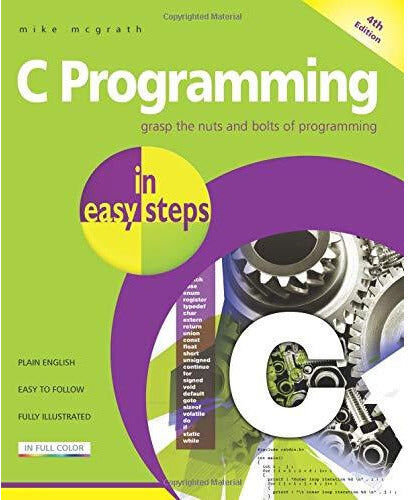
In Easy Steps Limited C Programming In Easy Steps 4th EditionC Programming in easy steps has an easy-to-follow style that will appeal to anyone who wants to begin programming in C, from programmers moving from another programming language, to the student who is studying C programming at school or college, or to those seeking a career in computing who need a fundamental understanding of procedural programming. C Programming in easy steps begins by explaining how to download and install a free C compiler so that you can quickly begin to create your own executable programs by copying the book's examples. You need have no previous knowledge of any programming language so it's ideal for the newcomer to computer programming. Each chapter builds your knowledge of C. C Programming in easy steps contains separate chapters on the major features of the C language. There are complete example programs that demonstrate each aspect of C together with screenshots that illustrate the output when that program has been executed. The sample code provided all has colored syntax-highlighting for clearer understanding. By the end of this book you will have gained a sound understanding of the C language and be able to write your own C programs and compile them into executable files that can be run on any compatible computer. Fully updated and revised since the third edition, which was published in April 2009.5,49 £*Shipping: 2,99 £Secure redirect to the provider
-
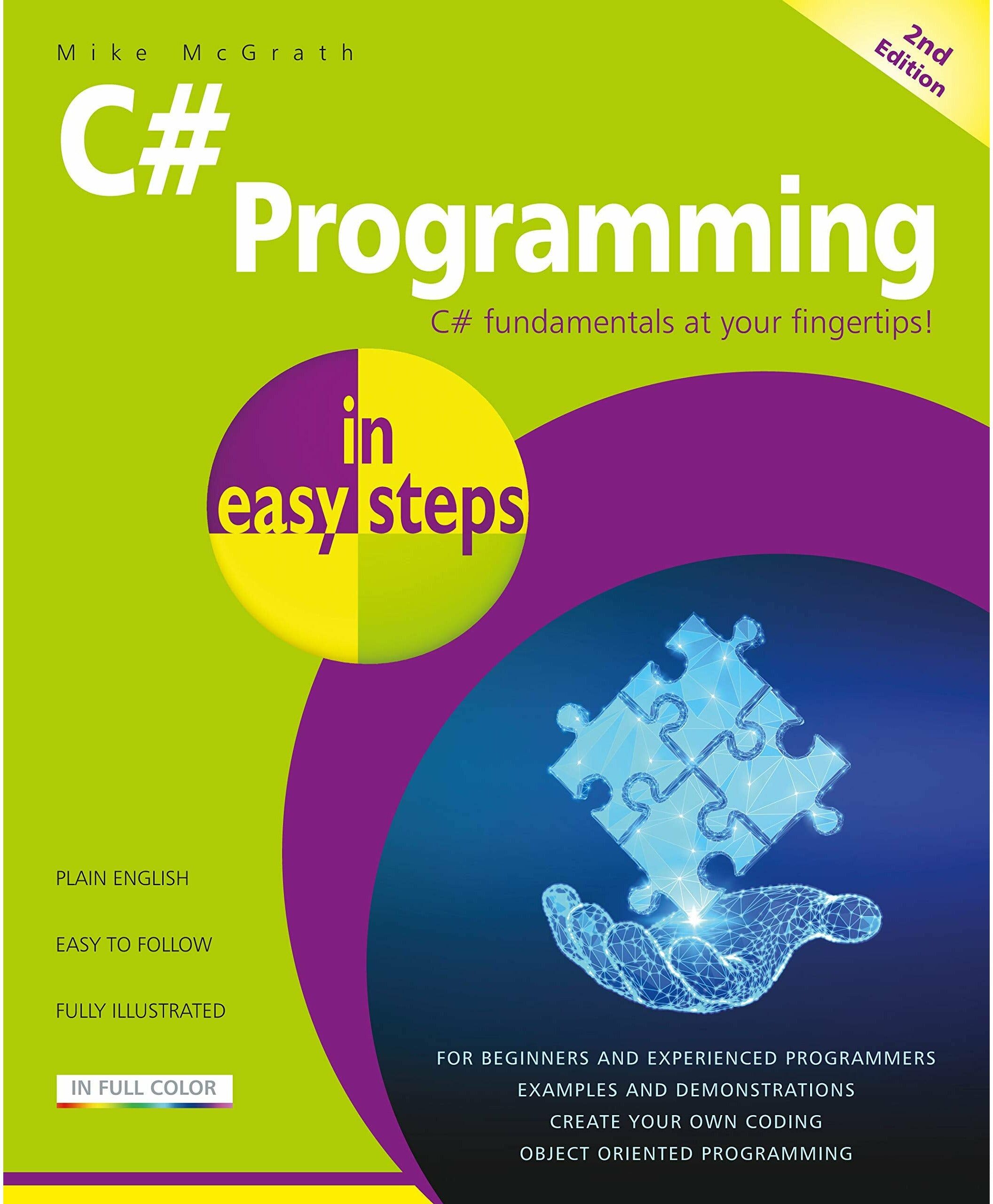
In Easy Steps Limited C# Programming in easy steps, 2nd edition by Mike McGrathC# Programming in easy steps, 2nd edition will teach you to code applications, and demonstrates every aspect of the C# language you will need to produce professional programming results. Its examples provide clear syntax-highlighted code showing C# language basics including variables, arrays, logic, looping, methods, and classes. C# Programming in easy steps, 2nd edition begins by explaining how to install the free Visual Studio Community Edition, to create an environment in which you can quickly begin to create your own executable programs by copying the book's examples. It demonstrates all the C# language basics before moving on to provide examples of Object Oriented Programming. The book concludes by demonstrating how you can use your acquired knowledge to create graphic programs for traditional PC Desktop apps, and also as Universal apps for multiple devices. C# Programming in easy steps, 2nd edition has an easy-to-follow style that will appeal to: Anyone who wants to begin programming in C# The programmer who quickly wants to add C# to their skills set The hobbyist who wants to begin creating apps for their own computer The student, and to those seeking a career in computing, who need a fundamental understanding of C# programming Table of contents: Getting started Storing values Performing operations Making statements Devising methods Handling strings Accessing files Solving problems Creating objects Controlling events Building an application Targeting devices4,98 £*Shipping: 1,99 £Secure redirect to the provider
-
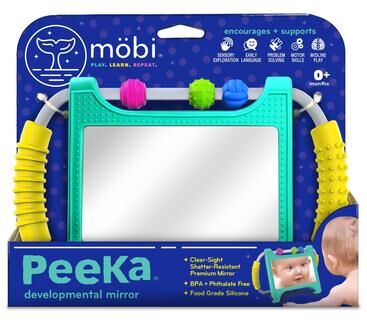
Mobi Peeka Development MirrorPEEKA® developmental mirror was designed by our team of doctors, therapists and parents to help children explore, learn and grow. When you place PEEKA® in the hands of your little ones, you will be amazed at the variety of ways they find to play...26,99 $*Shipping: 0,00 $Secure redirect to the provider

-
Can one create phylogenetic trees and cladograms using taxonomy?
Yes, one can create phylogenetic trees and cladograms using taxonomy. Taxonomy, the science of classifying organisms based on shared characteristics, forms the basis for constructing phylogenetic trees and cladograms. By organizing organisms into groups based on their evolutionary relationships, taxonomic classifications can be used to create visual representations of these relationships in the form of phylogenetic trees and cladograms. These tools help researchers understand the evolutionary history and relatedness of different species. **
-
What is the difference between taxonomy and nomenclature in systematics?
Taxonomy is the science of classifying and naming organisms based on their characteristics and evolutionary relationships. It involves identifying, describing, and naming species, as well as organizing them into hierarchical categories like genus and family. Nomenclature, on the other hand, is the system of rules and conventions for naming organisms. It includes the specific rules for assigning scientific names to organisms, ensuring that each species has a unique and universally recognized name. In summary, taxonomy is the science of classification, while nomenclature is the system of naming within that classification system. **
-
Which Python or PHP framework is suitable for web development?
Both Python and PHP have popular frameworks for web development. For Python, Django is a suitable framework known for its scalability, security, and built-in features like authentication and admin interface. On the other hand, for PHP, Laravel is a popular framework known for its elegant syntax, robust features, and a large community of developers. Both frameworks have their strengths and weaknesses, so the choice ultimately depends on the specific requirements of the project and the developer's familiarity with the language and framework. **
-
Why does the WordPress custom taxonomy not appear in the Gutenberg editor?
The WordPress custom taxonomy does not appear in the Gutenberg editor by default because the Gutenberg editor is designed to primarily handle content creation and editing, while taxonomies are more related to organizing and categorizing content. However, developers can enable the display of custom taxonomies in the Gutenberg editor by using custom code or plugins to integrate the taxonomies into the editor interface. This allows users to easily assign and manage taxonomy terms for their content within the Gutenberg editor. **

How can one transition web development from a fake database to a real database using Vue?
To transition web development from a fake database to a real database using Vue, you can start by setting up a backend server that connects to your real database. This server can handle requests from your Vue application and interact with the database to retrieve or store data. You will need to update your Vue components to make API calls to the backend server instead of directly manipulating the fake database. By following this approach, you can seamlessly transition from using a fake database to a real database in your Vue application. **
How can one become independently involved in web development through programming?
One can become independently involved in web development through programming by first learning the necessary programming languages such as HTML, CSS, and JavaScript. There are many online resources and tutorials available for free or at a low cost to help individuals learn these languages. Once the basics are mastered, one can start building simple websites and gradually take on more complex projects. Additionally, contributing to open-source projects, attending web development meetups, and networking with other developers can also help in gaining more experience and becoming independently involved in web development. **
Top-Angebote
Products related to Taxonomy:
-
Terra by Obeetee Nimes Diamond Framework RugTerra by Obeetee redefines timeless craftsmanship for the modern world. Rooted in the rich traditions of old-world textile artistry and elevated by innovative manufacturing techniques, Terra brings together heritage and modernity in every piece.129,99 $*Shipping: 0,00 $Secure redirect to the provider
-
In Easy Steps Limited C Programming In Easy Steps 4th EditionC Programming in easy steps has an easy-to-follow style that will appeal to anyone who wants to begin programming in C, from programmers moving from another programming language, to the student who is studying C programming at school or college, or to those seeking a career in computing who need a fundamental understanding of procedural programming. C Programming in easy steps begins by explaining how to download and install a free C compiler so that you can quickly begin to create your own executable programs by copying the book's examples. You need have no previous knowledge of any programming language so it's ideal for the newcomer to computer programming. Each chapter builds your knowledge of C. C Programming in easy steps contains separate chapters on the major features of the C language. There are complete example programs that demonstrate each aspect of C together with screenshots that illustrate the output when that program has been executed. The sample code provided all has colored syntax-highlighting for clearer understanding. By the end of this book you will have gained a sound understanding of the C language and be able to write your own C programs and compile them into executable files that can be run on any compatible computer. Fully updated and revised since the third edition, which was published in April 2009.5,49 £*Shipping: 2,99 £Secure redirect to the provider
-
In Easy Steps Limited C# Programming in easy steps, 2nd edition by Mike McGrathC# Programming in easy steps, 2nd edition will teach you to code applications, and demonstrates every aspect of the C# language you will need to produce professional programming results. Its examples provide clear syntax-highlighted code showing C# language basics including variables, arrays, logic, looping, methods, and classes. C# Programming in easy steps, 2nd edition begins by explaining how to install the free Visual Studio Community Edition, to create an environment in which you can quickly begin to create your own executable programs by copying the book's examples. It demonstrates all the C# language basics before moving on to provide examples of Object Oriented Programming. The book concludes by demonstrating how you can use your acquired knowledge to create graphic programs for traditional PC Desktop apps, and also as Universal apps for multiple devices. C# Programming in easy steps, 2nd edition has an easy-to-follow style that will appeal to: Anyone who wants to begin programming in C# The programmer who quickly wants to add C# to their skills set The hobbyist who wants to begin creating apps for their own computer The student, and to those seeking a career in computing, who need a fundamental understanding of C# programming Table of contents: Getting started Storing values Performing operations Making statements Devising methods Handling strings Accessing files Solving problems Creating objects Controlling events Building an application Targeting devices4,98 £*Shipping: 1,99 £Secure redirect to the provider
-
Is taxonomy the same as systematics?
Taxonomy and systematics are related fields within biology, but they are not the same. Taxonomy is the science of naming, defining, and classifying organisms into different categories based on their similarities and differences. Systematics, on the other hand, is the study of the evolutionary relationships between different organisms, including their classification and the reconstruction of their evolutionary history. While taxonomy focuses on the naming and categorization of organisms, systematics delves deeper into understanding the evolutionary relationships and patterns among different species. **
-
Can one create family trees and cladograms using taxonomy?
Yes, one can create family trees and cladograms using taxonomy. Taxonomy is the science of classifying organisms into different categories based on their characteristics and evolutionary relationships. By organizing organisms into groups based on their similarities and differences, taxonomists can create family trees that show the evolutionary history and relationships between different species. Cladograms, which are branching diagrams that show these relationships, can also be constructed using taxonomic data to visually represent the evolutionary history of a group of organisms. **
-
Can one create phylogenetic trees and cladograms using taxonomy?
Yes, one can create phylogenetic trees and cladograms using taxonomy. Taxonomy, the science of classifying organisms based on shared characteristics, forms the basis for constructing phylogenetic trees and cladograms. By organizing organisms into groups based on their evolutionary relationships, taxonomic classifications can be used to create visual representations of these relationships in the form of phylogenetic trees and cladograms. These tools help researchers understand the evolutionary history and relatedness of different species. **
-
What is the difference between taxonomy and nomenclature in systematics?
Taxonomy is the science of classifying and naming organisms based on their characteristics and evolutionary relationships. It involves identifying, describing, and naming species, as well as organizing them into hierarchical categories like genus and family. Nomenclature, on the other hand, is the system of rules and conventions for naming organisms. It includes the specific rules for assigning scientific names to organisms, ensuring that each species has a unique and universally recognized name. In summary, taxonomy is the science of classification, while nomenclature is the system of naming within that classification system. **
Similar search terms for Taxonomy
-
Mobi Peeka Development MirrorPEEKA® developmental mirror was designed by our team of doctors, therapists and parents to help children explore, learn and grow. When you place PEEKA® in the hands of your little ones, you will be amazed at the variety of ways they find to play...26,99 $*Shipping: 0,00 $Secure redirect to the provider
-
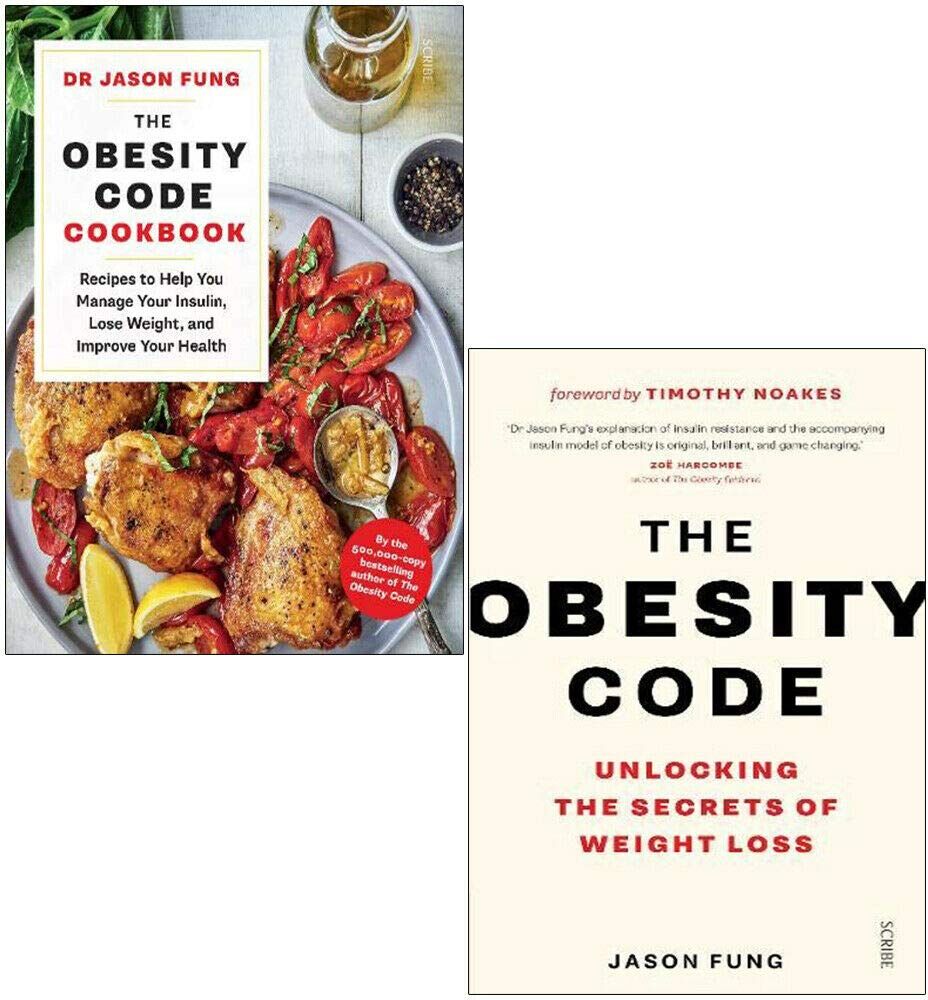
Scribe UK Dr Jason Fung 2 Books Collection Set - The Obesity Code Cookbook & The Obesity CodeDr Jason Fung 2 Books Collection Set :The Obesity Code Cookbook:By the 500,000-copy bestselling author of The Obesity Code. Recipes to revolutionalise the way you cook, eat, and live. In The Obesity Code, Dr Jason Fung introduced the idea that obesity is caused by our hormones, specifically insulin, and offered practical, easy-to-follow advice on how to lose weight for good. Now, The Obesity Code Cookbook makes it easier than ever to follow his methods.The Obesity Code:We are in the midst of an obesity epidemic, but despite being inundated with diet advice we are only getting fatter. We count calories and exercise regularly, yet still the pounds won't budge. Why? In this highly readable and provocative book, Dr Jason Fung sets out a groundbreaking new theory: that obesity is caused by our hormones, rather than a lack of self-control. He reveals that overproduction of insulin in the body is the root cause of obesity and obesity-related illnesses including type 2 diabetes, and offers robust scientific evidence that reversing insulin resistance is the only way to lose weight in the long term.14,95 £*Shipping: 2,99 £Secure redirect to the provider
-
Scribe UK The Obesity Code CookbookBy the 500;000-copy bestselling author of The Obesity Code. Recipes to revolutionalise the way you cook; eat; and live. In The Obesity Code; Dr Jason Fung introduced the idea that obesity is caused by our hormones; specifically insulin; and offered practical; easy-to-follow advice on how to lose weight for good. Now; The Obesity Code Cookbook makes it easier than ever to follow his methods. 100 mouth-watering recipes -- from slow-roasted pork shoulder to chia pudding and almond cake -- showcase healthy fats; nutrient-dense foods; and low or no carbs; with diet plans to help balance your nutrition and energy requirements with your long-term health objectives. The Obesity Code Cookbook is an indispensable tool for home cooks looking to lower insulin; lose weight; or simply lead a healthy; longer life.8,99 £*Shipping: 2,99 £Secure redirect to the provider
-
Which Python or PHP framework is suitable for web development?
Both Python and PHP have popular frameworks for web development. For Python, Django is a suitable framework known for its scalability, security, and built-in features like authentication and admin interface. On the other hand, for PHP, Laravel is a popular framework known for its elegant syntax, robust features, and a large community of developers. Both frameworks have their strengths and weaknesses, so the choice ultimately depends on the specific requirements of the project and the developer's familiarity with the language and framework. **
-
Why does the WordPress custom taxonomy not appear in the Gutenberg editor?
The WordPress custom taxonomy does not appear in the Gutenberg editor by default because the Gutenberg editor is designed to primarily handle content creation and editing, while taxonomies are more related to organizing and categorizing content. However, developers can enable the display of custom taxonomies in the Gutenberg editor by using custom code or plugins to integrate the taxonomies into the editor interface. This allows users to easily assign and manage taxonomy terms for their content within the Gutenberg editor. **
-
How can one transition web development from a fake database to a real database using Vue?
To transition web development from a fake database to a real database using Vue, you can start by setting up a backend server that connects to your real database. This server can handle requests from your Vue application and interact with the database to retrieve or store data. You will need to update your Vue components to make API calls to the backend server instead of directly manipulating the fake database. By following this approach, you can seamlessly transition from using a fake database to a real database in your Vue application. **
-
How can one become independently involved in web development through programming?
One can become independently involved in web development through programming by first learning the necessary programming languages such as HTML, CSS, and JavaScript. There are many online resources and tutorials available for free or at a low cost to help individuals learn these languages. Once the basics are mastered, one can start building simple websites and gradually take on more complex projects. Additionally, contributing to open-source projects, attending web development meetups, and networking with other developers can also help in gaining more experience and becoming independently involved in web development. **
* All prices are inclusive of VAT and, if applicable, plus shipping costs. The offer information is based on the details provided by the respective shop and is updated through automated processes. Real-time updates do not occur, so deviations can occur in individual cases. ** Note: Parts of this content were created by AI.