Buy phpbuddy.eu ?
We are moving the project
phpbuddy.eu .
Are you interested in purchasing the domain
phpbuddy.eu ?
domain@kv-gmbh.de · 0541-91531010
Buy phpbuddy.eu ?
Where is recursion needed in programming?
Recursion is needed in programming when a problem can be broken down into smaller, similar sub-problems. It is particularly useful for tasks such as tree traversal, searching and sorting algorithms, and problems that can be defined in terms of smaller instances of the same problem. Recursion allows for elegant and concise solutions to these types of problems, and can often result in more readable and maintainable code. However, it is important to be mindful of potential performance and stack overflow issues when using recursion. **
Is it still recursion if I use recursion within a loop?
Yes, it is still considered recursion if you use recursion within a loop. Recursion is a programming technique where a function calls itself to solve a problem. In this case, if you have a loop that calls a function which in turn calls itself, it is still recursion. The loop is just another way of controlling the repetition of the recursive function calls. **


Similar search terms for Recursion
Top-Angebote
Products related to Recursion:
-
Terra by Obeetee Nimes Diamond Framework RugTerra by Obeetee redefines timeless craftsmanship for the modern world. Rooted in the rich traditions of old-world textile artistry and elevated by innovative manufacturing techniques, Terra brings together heritage and modernity in every piece.25,49 $*Shipping: 0,00 $Secure redirect to the provider
-
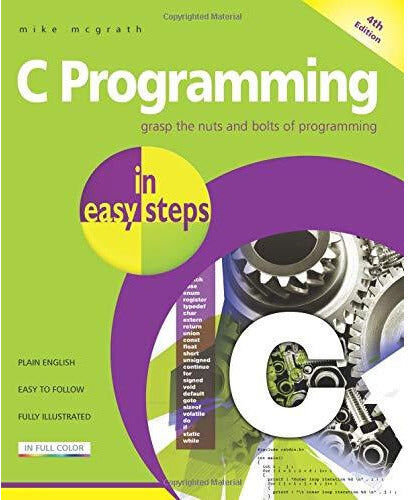
In Easy Steps Limited C Programming In Easy Steps 4th EditionC Programming in easy steps has an easy-to-follow style that will appeal to anyone who wants to begin programming in C, from programmers moving from another programming language, to the student who is studying C programming at school or college, or to those seeking a career in computing who need a fundamental understanding of procedural programming. C Programming in easy steps begins by explaining how to download and install a free C compiler so that you can quickly begin to create your own executable programs by copying the book's examples. You need have no previous knowledge of any programming language so it's ideal for the newcomer to computer programming. Each chapter builds your knowledge of C. C Programming in easy steps contains separate chapters on the major features of the C language. There are complete example programs that demonstrate each aspect of C together with screenshots that illustrate the output when that program has been executed. The sample code provided all has colored syntax-highlighting for clearer understanding. By the end of this book you will have gained a sound understanding of the C language and be able to write your own C programs and compile them into executable files that can be run on any compatible computer. Fully updated and revised since the third edition, which was published in April 2009.5,49 £*Shipping: 2,99 £Secure redirect to the provider
-
DKNY Pure Framework Indoor only Geometric Area RugThe DKNY Pure Framework collection brings soft structure and modern texture to your surroundings. Hand-tufted from wool, each rug features a flatwoven base with raised patterns that add quiet dimension.982,00 $*Shipping: 0,00 $Secure redirect to the provider



-
What does the source code for recursion look like?
Recursion in source code typically involves a function that calls itself within its own definition. The function will have a base case, which is a condition that stops the recursive calls, and a recursive case, which is where the function calls itself with modified arguments. The base case is crucial to prevent infinite recursion. Here's an example of a simple recursive function in Python that calculates the factorial of a number: ```python def factorial(n): if n == 0: return 1 else: return n * factorial(n-1) ``` In this example, the `factorial` function calls itself with the argument `n-1` until it reaches the base case of `n == 0`, at which point it stops the recursive calls and returns 1. **
-
How does this recursion work?
Recursion is a programming technique where a function calls itself in order to solve a problem. When a function is called recursively, it breaks down the problem into smaller subproblems until a base case is reached, at which point the function stops calling itself and starts returning values back up the call stack. This process allows for elegant and concise solutions to problems that can be broken down into smaller, similar subproblems. However, it is important to ensure that the base case is well-defined and that the recursive calls eventually lead to the base case to avoid infinite recursion. **
-
What is recursion in C?
Recursion in C is a programming technique where a function calls itself in order to solve a problem. This can be a powerful and elegant way to solve certain types of problems, particularly those that can be broken down into smaller, similar sub-problems. However, it is important to be cautious when using recursion, as it can lead to stack overflow if not implemented carefully. Recursion is often used in algorithms for tasks such as searching, sorting, and traversing data structures like trees and graphs. **
-
What is recursion in Prolog?
Recursion in Prolog refers to the ability of a predicate to call itself within its own definition. This allows for the creation of iterative processes and the implementation of repetitive algorithms. Recursion is a fundamental concept in Prolog programming and is often used to solve problems that can be broken down into smaller, similar sub-problems. It is important to ensure that recursive predicates have a base case to prevent infinite recursion. **

What is recursion in Java?
Recursion in Java is a programming technique where a method calls itself to solve a problem. This can be a powerful and elegant way to solve certain types of problems, especially those that can be broken down into smaller, similar subproblems. In a recursive method, there is typically a base case that defines when the method should stop calling itself, preventing an infinite loop. Recursion can be used to solve problems like traversing tree structures, calculating factorials, and implementing sorting algorithms. **
What is a recursion tree?
A recursion tree is a visual representation of the recursive calls made in a recursive algorithm. Each node in the tree represents a specific recursive call, and the edges represent the flow of the recursive calls. The tree helps to visualize the sequence of recursive calls and their relationships, making it easier to understand the overall behavior and performance of the recursive algorithm. Recursion trees are commonly used to analyze the time complexity of recursive algorithms and to gain insights into their execution. **
Top-Angebote
Products related to Recursion:
-
Pan Macmillan Blake Crouch Collection 3 Books Set (Upgrade, Recursion, Dark Matter)Blake Crouch Collection 3 Books Set (Upgrade, Recursion, Dark Matter):Upgrade:At first, Logan Ramsay isn’t sure if anything’s different. He just feels a little . . . sharper. Better able to concentrate. Better at multitasking. Reading a bit faster, memorizing better, needing less sleep. But before long, he can’t deny it: Something’s happening to his brain. To his body. He’s starting to see the world, and those around him—even those he loves most—in whole new ways. Dark Matter:Those are the last words Jason Dessen hears before the masked abductor knocks him unconscious. Before he awakens to find himself strapped to a gurney, surrounded by strangers in hazmat suits. Before a man Jason’s never met smiles down at him and says, “Welcome back, my friend.” In this world he’s woken up to, Jason’s life is not the one he knows. His wife is not his wife. His son was never born. And Jason is not an ordinary college physics professor, but a celebrated genius who has achieved something remarkable. Something impossible. Recursion:At first, it looks like a disease. An epidemic that spreads through no known means, driving its victims mad with memories of a life they never lived. But the force that’s sweeping the world is no pathogen. It’s just the first shock wave, unleashed by a stunning discovery—and what’s in jeopardy is not our minds but the very fabric of time itself. In New York City, Detective Barry Sutton is closing in on the truth—and in a remote laboratory, neuroscientist Helena Smith is unaware that she alone holds the key to this mystery . . . and the tools for fighting back.11,99 £*Shipping: 2,99 £Secure redirect to the provider
-
Pan Ltd Blake Crouch 6 Books Collection Set (Upgrade, Recursion, Dark Matter, Pines, Wayward & The Last Town)Experience Blake Crouch’s world of thrilling science fiction and suspense with this incredible collection. Featuring the best of his mind-bending work, "Dark Matter", "Recursion", "Upgrade", and the complete Wayward Pines Trilogy, this set will immerse you in alternate realities, time-bending dilemmas, and terrifying secrets hidden in small-town America. 1. Dark Matter (ISBN: 9781447297581) A physicist is kidnapped and sent to an alternate universe, where his life has taken a different turn. A relentless thriller that explores choices and realities. 2. Recursion (ISBN: 9781509866670) A new disease is rewriting memories, causing chaos across the world. As two protagonists race against time, they uncover shocking truths about memory and existence. 3. Upgrade (ISBN: 9781529045376) In a future where genetic enhancements are possible, a man must navigate the dangerous consequences of his upgrade. An ethical and thrilling journey into the future of humanity. 4. Pines (ISBN: 9781529099799) Secret Service agent Ethan Burke arrives in Wayward Pines, Idaho, to uncover the truth behind two missing agents, only to discover a chilling mystery that defies explanation. 5. Wayward (ISBN: 9781529099850) The unsettling secrets of Wayward Pines deepen, and Ethan must uncover the truth while struggling with his own reality in this suspenseful sequel. 6. The Last Town (ISBN: 9781529099829) The dramatic conclusion to the Wayward Pines trilogy, where Ethan confronts the terrifying history of the town and the dark truth behind its existence. This collection is perfect for fans of psychological thrillers and sci-fi, featuring gripping stories filled with suspense, twists, and unforgettable characters.17,95 £*Shipping: 2,99 £Secure redirect to the provider
-
Terra by Obeetee Nimes Diamond Framework RugTerra by Obeetee redefines timeless craftsmanship for the modern world. Rooted in the rich traditions of old-world textile artistry and elevated by innovative manufacturing techniques, Terra brings together heritage and modernity in every piece.25,49 $*Shipping: 0,00 $Secure redirect to the provider
-
Where is recursion needed in programming?
Recursion is needed in programming when a problem can be broken down into smaller, similar sub-problems. It is particularly useful for tasks such as tree traversal, searching and sorting algorithms, and problems that can be defined in terms of smaller instances of the same problem. Recursion allows for elegant and concise solutions to these types of problems, and can often result in more readable and maintainable code. However, it is important to be mindful of potential performance and stack overflow issues when using recursion. **
-
Is it still recursion if I use recursion within a loop?
Yes, it is still considered recursion if you use recursion within a loop. Recursion is a programming technique where a function calls itself to solve a problem. In this case, if you have a loop that calls a function which in turn calls itself, it is still recursion. The loop is just another way of controlling the repetition of the recursive function calls. **
-
What does the source code for recursion look like?
Recursion in source code typically involves a function that calls itself within its own definition. The function will have a base case, which is a condition that stops the recursive calls, and a recursive case, which is where the function calls itself with modified arguments. The base case is crucial to prevent infinite recursion. Here's an example of a simple recursive function in Python that calculates the factorial of a number: ```python def factorial(n): if n == 0: return 1 else: return n * factorial(n-1) ``` In this example, the `factorial` function calls itself with the argument `n-1` until it reaches the base case of `n == 0`, at which point it stops the recursive calls and returns 1. **
-
How does this recursion work?
Recursion is a programming technique where a function calls itself in order to solve a problem. When a function is called recursively, it breaks down the problem into smaller subproblems until a base case is reached, at which point the function stops calling itself and starts returning values back up the call stack. This process allows for elegant and concise solutions to problems that can be broken down into smaller, similar subproblems. However, it is important to ensure that the base case is well-defined and that the recursive calls eventually lead to the base case to avoid infinite recursion. **
Similar search terms for Recursion
-
In Easy Steps Limited C Programming In Easy Steps 4th EditionC Programming in easy steps has an easy-to-follow style that will appeal to anyone who wants to begin programming in C, from programmers moving from another programming language, to the student who is studying C programming at school or college, or to those seeking a career in computing who need a fundamental understanding of procedural programming. C Programming in easy steps begins by explaining how to download and install a free C compiler so that you can quickly begin to create your own executable programs by copying the book's examples. You need have no previous knowledge of any programming language so it's ideal for the newcomer to computer programming. Each chapter builds your knowledge of C. C Programming in easy steps contains separate chapters on the major features of the C language. There are complete example programs that demonstrate each aspect of C together with screenshots that illustrate the output when that program has been executed. The sample code provided all has colored syntax-highlighting for clearer understanding. By the end of this book you will have gained a sound understanding of the C language and be able to write your own C programs and compile them into executable files that can be run on any compatible computer. Fully updated and revised since the third edition, which was published in April 2009.5,49 £*Shipping: 2,99 £Secure redirect to the provider
-
DKNY Pure Framework Indoor only Geometric Area RugThe DKNY Pure Framework collection brings soft structure and modern texture to your surroundings. Hand-tufted from wool, each rug features a flatwoven base with raised patterns that add quiet dimension.982,00 $*Shipping: 0,00 $Secure redirect to the provider
-
DKNY Pure Framework Indoor only Geometric Area RugThe DKNY Pure Framework collection brings soft structure and modern texture to your surroundings. Hand-tufted from wool, each rug features a flatwoven base with raised patterns that add quiet dimension.1196,00 $*Shipping: 0,00 $Secure redirect to the provider
-
What is recursion in C?
Recursion in C is a programming technique where a function calls itself in order to solve a problem. This can be a powerful and elegant way to solve certain types of problems, particularly those that can be broken down into smaller, similar sub-problems. However, it is important to be cautious when using recursion, as it can lead to stack overflow if not implemented carefully. Recursion is often used in algorithms for tasks such as searching, sorting, and traversing data structures like trees and graphs. **
-
What is recursion in Prolog?
Recursion in Prolog refers to the ability of a predicate to call itself within its own definition. This allows for the creation of iterative processes and the implementation of repetitive algorithms. Recursion is a fundamental concept in Prolog programming and is often used to solve problems that can be broken down into smaller, similar sub-problems. It is important to ensure that recursive predicates have a base case to prevent infinite recursion. **
-
What is recursion in Java?
Recursion in Java is a programming technique where a method calls itself to solve a problem. This can be a powerful and elegant way to solve certain types of problems, especially those that can be broken down into smaller, similar subproblems. In a recursive method, there is typically a base case that defines when the method should stop calling itself, preventing an infinite loop. Recursion can be used to solve problems like traversing tree structures, calculating factorials, and implementing sorting algorithms. **
-
What is a recursion tree?
A recursion tree is a visual representation of the recursive calls made in a recursive algorithm. Each node in the tree represents a specific recursive call, and the edges represent the flow of the recursive calls. The tree helps to visualize the sequence of recursive calls and their relationships, making it easier to understand the overall behavior and performance of the recursive algorithm. Recursion trees are commonly used to analyze the time complexity of recursive algorithms and to gain insights into their execution. **
* All prices are inclusive of VAT and, if applicable, plus shipping costs. The offer information is based on the details provided by the respective shop and is updated through automated processes. Real-time updates do not occur, so deviations can occur in individual cases. ** Note: Parts of this content were created by AI.