Buy phpbuddy.eu ?
We are moving the project
phpbuddy.eu .
Are you interested in purchasing the domain
phpbuddy.eu ?
domain@kv-gmbh.de · 0541-91531010
Buy phpbuddy.eu ?
What is the biserial correlation coefficient and the phi coefficient and the chi coefficient?
The biserial correlation coefficient is a measure of the strength and direction of the relationship between a continuous variable and a dichotomous variable. It is calculated when one variable is continuous and the other is dichotomous. The phi coefficient is a measure of association between two dichotomous variables. It is calculated using a 2x2 contingency table and ranges from -1 to 1, with 0 indicating no association and 1 indicating a perfect association. The chi coefficient is a measure of association between two dichotomous variables, similar to the phi coefficient. It is also calculated using a 2x2 contingency table and ranges from -1 to 1, with 0 indicating no association and 1 indicating a perfect association. **
Which correlation coefficient?
The correlation coefficient is a statistical measure that quantifies the strength and direction of a relationship between two variables. It ranges from -1 to 1, with -1 indicating a perfect negative correlation, 0 indicating no correlation, and 1 indicating a perfect positive correlation. The correlation coefficient is used to determine how closely the two variables are related and can help in making predictions or understanding the nature of the relationship between them. **

Similar search terms for Coefficient
Top-Angebote
Products related to Coefficient:
-
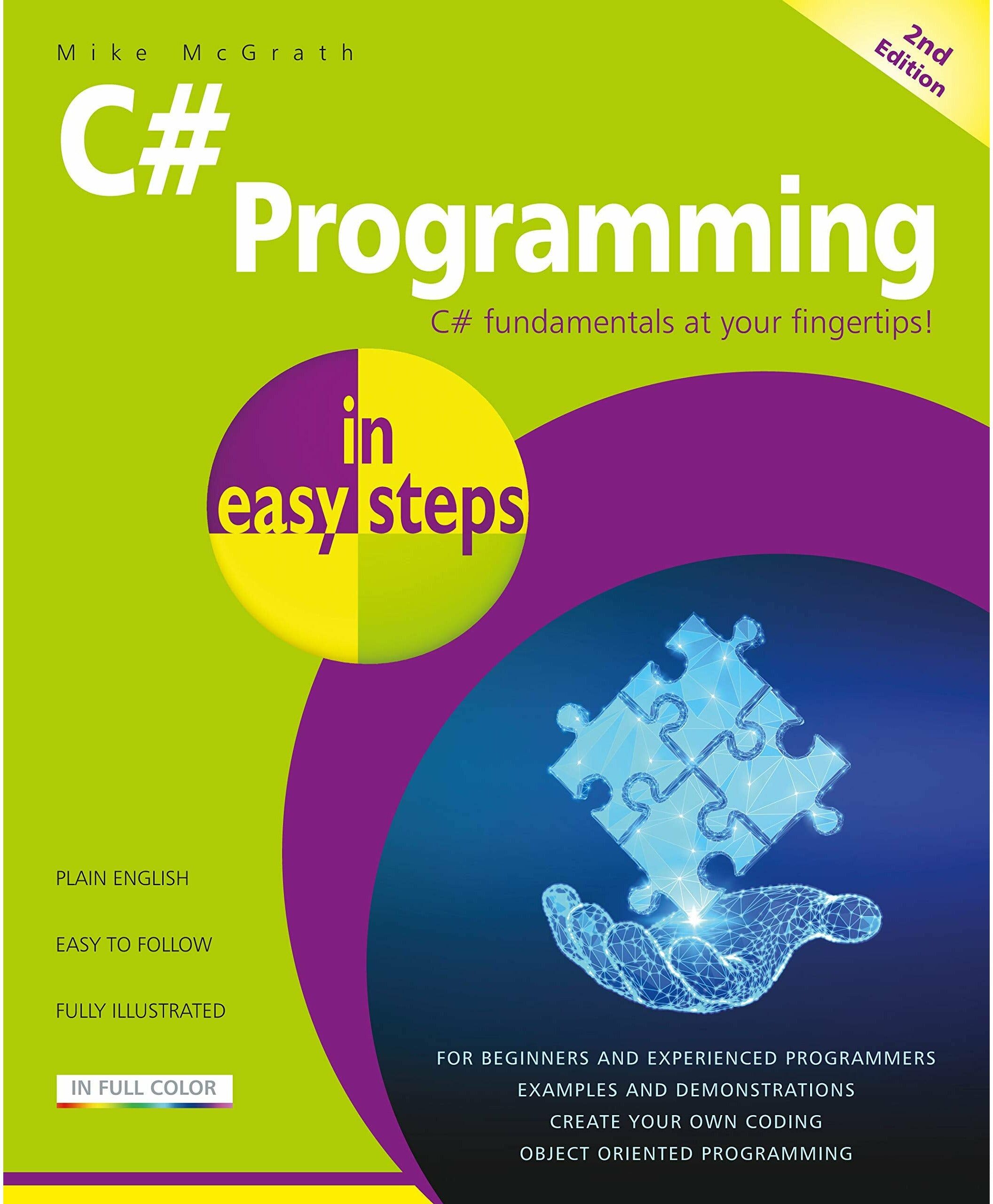
In Easy Steps Limited C# Programming in easy steps, 2nd edition by Mike McGrathC# Programming in easy steps, 2nd edition will teach you to code applications, and demonstrates every aspect of the C# language you will need to produce professional programming results. Its examples provide clear syntax-highlighted code showing C# language basics including variables, arrays, logic, looping, methods, and classes. C# Programming in easy steps, 2nd edition begins by explaining how to install the free Visual Studio Community Edition, to create an environment in which you can quickly begin to create your own executable programs by copying the book's examples. It demonstrates all the C# language basics before moving on to provide examples of Object Oriented Programming. The book concludes by demonstrating how you can use your acquired knowledge to create graphic programs for traditional PC Desktop apps, and also as Universal apps for multiple devices. C# Programming in easy steps, 2nd edition has an easy-to-follow style that will appeal to: Anyone who wants to begin programming in C# The programmer who quickly wants to add C# to their skills set The hobbyist who wants to begin creating apps for their own computer The student, and to those seeking a career in computing, who need a fundamental understanding of C# programming Table of contents: Getting started Storing values Performing operations Making statements Devising methods Handling strings Accessing files Solving problems Creating objects Controlling events Building an application Targeting devices4,98 £*Shipping: 1,99 £Secure redirect to the provider
-
Mobi Peeka Development MirrorPEEKA® developmental mirror was designed by our team of doctors, therapists and parents to help children explore, learn and grow. When you place PEEKA® in the hands of your little ones, you will be amazed at the variety of ways they find to play...26,99 $*Shipping: 0,00 $Secure redirect to the provider



-
Which Python or PHP framework is suitable for web development?
Both Python and PHP have popular frameworks for web development. For Python, Django is a suitable framework known for its scalability, security, and built-in features like authentication and admin interface. On the other hand, for PHP, Laravel is a popular framework known for its elegant syntax, robust features, and a large community of developers. Both frameworks have their strengths and weaknesses, so the choice ultimately depends on the specific requirements of the project and the developer's familiarity with the language and framework. **
-
What is the binomial coefficient?
The binomial coefficient, denoted as ${n \choose k}$, represents the number of ways to choose k elements from a set of n elements without regard to the order of selection. It is calculated using the formula ${n \choose k} = \frac{n!}{k!(n-k)!}$, where n! denotes the factorial of n. The binomial coefficient is commonly used in combinatorics and probability theory to calculate the number of combinations or possibilities in a given scenario. **
-
What is the Lusor coefficient?
The Lusor coefficient is a measure of the ability of a fluid to carry sediment. It is used in the field of sediment transport to quantify the sediment-carrying capacity of a fluid, such as water or air. The coefficient takes into account factors such as the size and density of the sediment particles, as well as the velocity and viscosity of the fluid. A higher Lusor coefficient indicates a greater ability of the fluid to transport sediment. **
-
What is the validity coefficient?
The validity coefficient is a statistical measure that quantifies the relationship between a predictor (such as a test or assessment) and a criterion (such as job performance or academic achievement). It indicates the degree to which the predictor is able to accurately predict the criterion. A higher validity coefficient suggests a stronger relationship between the predictor and the criterion, indicating that the predictor is more effective in predicting the criterion. Validity coefficients are commonly used in the field of psychometrics and are important for evaluating the effectiveness of selection tools and assessments. **
What is a Gini coefficient?
A Gini coefficient is a measure of income inequality within a population. It is calculated based on the distribution of income or wealth among individuals or households in a given country or region. The coefficient ranges from 0 to 1, with 0 representing perfect equality (everyone has the same income) and 1 representing perfect inequality (one person has all the income). A higher Gini coefficient indicates greater income inequality, while a lower coefficient indicates more equal distribution of income. **
What is the multiplication coefficient?
The multiplication coefficient is a number that represents the factor by which a quantity is multiplied. It is used to scale or increase the value of a quantity by a certain amount. For example, if the multiplication coefficient is 2, then the quantity is doubled. The multiplication coefficient is often used in mathematical equations and calculations to represent the relationship between different quantities. **
Top-Angebote
Products related to Coefficient:
-
DKNY Pure Framework Indoor only Geometric Area RugThe DKNY Pure Framework collection brings soft structure and modern texture to your surroundings. Hand-tufted from wool, each rug features a flatwoven base with raised patterns that add quiet dimension.982,00 $*Shipping: 0,00 $Secure redirect to the provider
-
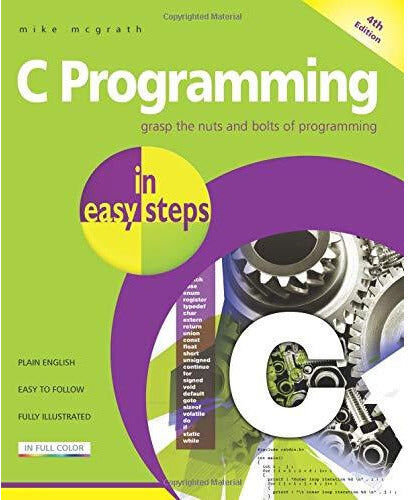
In Easy Steps Limited C Programming In Easy Steps 4th EditionC Programming in easy steps has an easy-to-follow style that will appeal to anyone who wants to begin programming in C, from programmers moving from another programming language, to the student who is studying C programming at school or college, or to those seeking a career in computing who need a fundamental understanding of procedural programming. C Programming in easy steps begins by explaining how to download and install a free C compiler so that you can quickly begin to create your own executable programs by copying the book's examples. You need have no previous knowledge of any programming language so it's ideal for the newcomer to computer programming. Each chapter builds your knowledge of C. C Programming in easy steps contains separate chapters on the major features of the C language. There are complete example programs that demonstrate each aspect of C together with screenshots that illustrate the output when that program has been executed. The sample code provided all has colored syntax-highlighting for clearer understanding. By the end of this book you will have gained a sound understanding of the C language and be able to write your own C programs and compile them into executable files that can be run on any compatible computer. Fully updated and revised since the third edition, which was published in April 2009.5,49 £*Shipping: 2,99 £Secure redirect to the provider
-
In Easy Steps Limited C# Programming in easy steps, 2nd edition by Mike McGrathC# Programming in easy steps, 2nd edition will teach you to code applications, and demonstrates every aspect of the C# language you will need to produce professional programming results. Its examples provide clear syntax-highlighted code showing C# language basics including variables, arrays, logic, looping, methods, and classes. C# Programming in easy steps, 2nd edition begins by explaining how to install the free Visual Studio Community Edition, to create an environment in which you can quickly begin to create your own executable programs by copying the book's examples. It demonstrates all the C# language basics before moving on to provide examples of Object Oriented Programming. The book concludes by demonstrating how you can use your acquired knowledge to create graphic programs for traditional PC Desktop apps, and also as Universal apps for multiple devices. C# Programming in easy steps, 2nd edition has an easy-to-follow style that will appeal to: Anyone who wants to begin programming in C# The programmer who quickly wants to add C# to their skills set The hobbyist who wants to begin creating apps for their own computer The student, and to those seeking a career in computing, who need a fundamental understanding of C# programming Table of contents: Getting started Storing values Performing operations Making statements Devising methods Handling strings Accessing files Solving problems Creating objects Controlling events Building an application Targeting devices4,98 £*Shipping: 1,99 £Secure redirect to the provider
-
What is the biserial correlation coefficient and the phi coefficient and the chi coefficient?
The biserial correlation coefficient is a measure of the strength and direction of the relationship between a continuous variable and a dichotomous variable. It is calculated when one variable is continuous and the other is dichotomous. The phi coefficient is a measure of association between two dichotomous variables. It is calculated using a 2x2 contingency table and ranges from -1 to 1, with 0 indicating no association and 1 indicating a perfect association. The chi coefficient is a measure of association between two dichotomous variables, similar to the phi coefficient. It is also calculated using a 2x2 contingency table and ranges from -1 to 1, with 0 indicating no association and 1 indicating a perfect association. **
-
Which correlation coefficient?
The correlation coefficient is a statistical measure that quantifies the strength and direction of a relationship between two variables. It ranges from -1 to 1, with -1 indicating a perfect negative correlation, 0 indicating no correlation, and 1 indicating a perfect positive correlation. The correlation coefficient is used to determine how closely the two variables are related and can help in making predictions or understanding the nature of the relationship between them. **
-
Which Python or PHP framework is suitable for web development?
Both Python and PHP have popular frameworks for web development. For Python, Django is a suitable framework known for its scalability, security, and built-in features like authentication and admin interface. On the other hand, for PHP, Laravel is a popular framework known for its elegant syntax, robust features, and a large community of developers. Both frameworks have their strengths and weaknesses, so the choice ultimately depends on the specific requirements of the project and the developer's familiarity with the language and framework. **
-
What is the binomial coefficient?
The binomial coefficient, denoted as ${n \choose k}$, represents the number of ways to choose k elements from a set of n elements without regard to the order of selection. It is calculated using the formula ${n \choose k} = \frac{n!}{k!(n-k)!}$, where n! denotes the factorial of n. The binomial coefficient is commonly used in combinatorics and probability theory to calculate the number of combinations or possibilities in a given scenario. **
Similar search terms for Coefficient
-
Mobi Peeka Development MirrorPEEKA® developmental mirror was designed by our team of doctors, therapists and parents to help children explore, learn and grow. When you place PEEKA® in the hands of your little ones, you will be amazed at the variety of ways they find to play...26,99 $*Shipping: 0,00 $Secure redirect to the provider
-
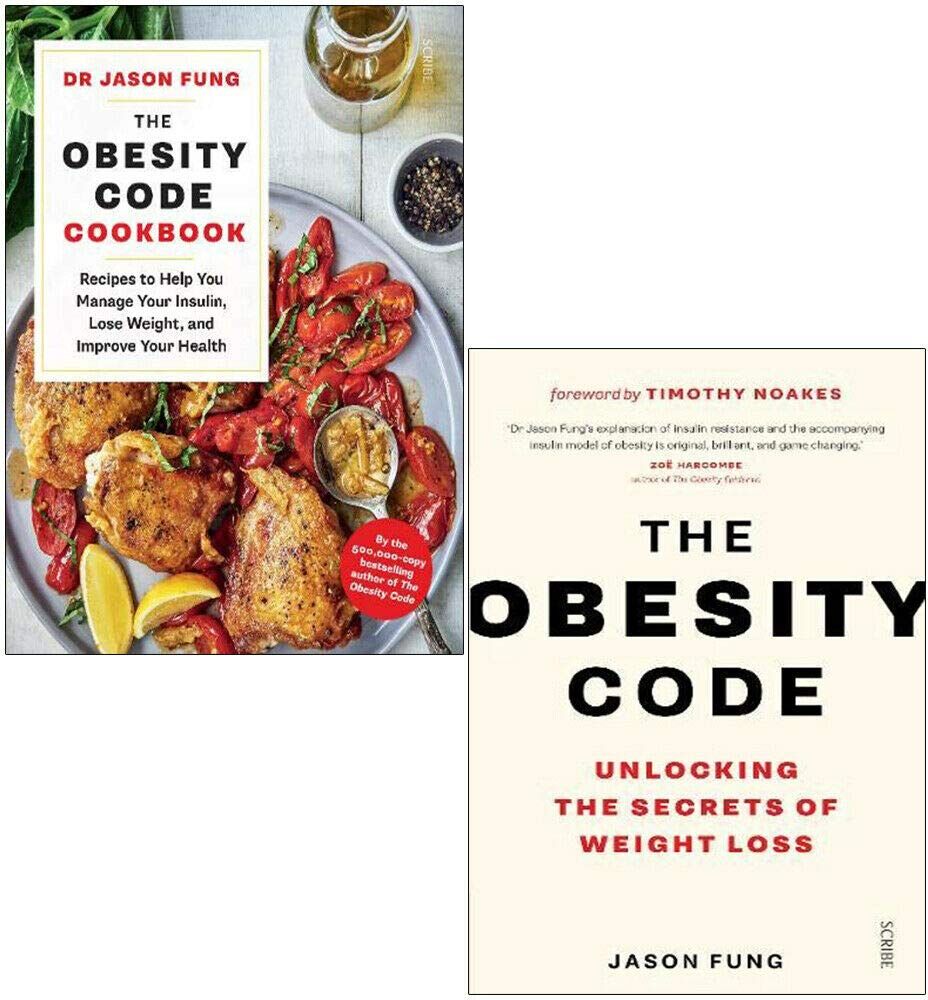
Scribe UK Dr Jason Fung 2 Books Collection Set - The Obesity Code Cookbook & The Obesity CodeDr Jason Fung 2 Books Collection Set :The Obesity Code Cookbook:By the 500,000-copy bestselling author of The Obesity Code. Recipes to revolutionalise the way you cook, eat, and live. In The Obesity Code, Dr Jason Fung introduced the idea that obesity is caused by our hormones, specifically insulin, and offered practical, easy-to-follow advice on how to lose weight for good. Now, The Obesity Code Cookbook makes it easier than ever to follow his methods.The Obesity Code:We are in the midst of an obesity epidemic, but despite being inundated with diet advice we are only getting fatter. We count calories and exercise regularly, yet still the pounds won't budge. Why? In this highly readable and provocative book, Dr Jason Fung sets out a groundbreaking new theory: that obesity is caused by our hormones, rather than a lack of self-control. He reveals that overproduction of insulin in the body is the root cause of obesity and obesity-related illnesses including type 2 diabetes, and offers robust scientific evidence that reversing insulin resistance is the only way to lose weight in the long term.14,95 £*Shipping: 2,99 £Secure redirect to the provider
-
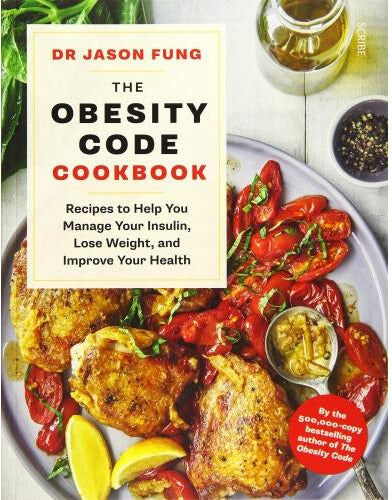
Scribe UK The Obesity Code CookbookBy the 500;000-copy bestselling author of The Obesity Code. Recipes to revolutionalise the way you cook; eat; and live. In The Obesity Code; Dr Jason Fung introduced the idea that obesity is caused by our hormones; specifically insulin; and offered practical; easy-to-follow advice on how to lose weight for good. Now; The Obesity Code Cookbook makes it easier than ever to follow his methods. 100 mouth-watering recipes -- from slow-roasted pork shoulder to chia pudding and almond cake -- showcase healthy fats; nutrient-dense foods; and low or no carbs; with diet plans to help balance your nutrition and energy requirements with your long-term health objectives. The Obesity Code Cookbook is an indispensable tool for home cooks looking to lower insulin; lose weight; or simply lead a healthy; longer life.8,99 £*Shipping: 2,99 £Secure redirect to the provider
-
What is the Lusor coefficient?
The Lusor coefficient is a measure of the ability of a fluid to carry sediment. It is used in the field of sediment transport to quantify the sediment-carrying capacity of a fluid, such as water or air. The coefficient takes into account factors such as the size and density of the sediment particles, as well as the velocity and viscosity of the fluid. A higher Lusor coefficient indicates a greater ability of the fluid to transport sediment. **
-
What is the validity coefficient?
The validity coefficient is a statistical measure that quantifies the relationship between a predictor (such as a test or assessment) and a criterion (such as job performance or academic achievement). It indicates the degree to which the predictor is able to accurately predict the criterion. A higher validity coefficient suggests a stronger relationship between the predictor and the criterion, indicating that the predictor is more effective in predicting the criterion. Validity coefficients are commonly used in the field of psychometrics and are important for evaluating the effectiveness of selection tools and assessments. **
-
What is a Gini coefficient?
A Gini coefficient is a measure of income inequality within a population. It is calculated based on the distribution of income or wealth among individuals or households in a given country or region. The coefficient ranges from 0 to 1, with 0 representing perfect equality (everyone has the same income) and 1 representing perfect inequality (one person has all the income). A higher Gini coefficient indicates greater income inequality, while a lower coefficient indicates more equal distribution of income. **
-
What is the multiplication coefficient?
The multiplication coefficient is a number that represents the factor by which a quantity is multiplied. It is used to scale or increase the value of a quantity by a certain amount. For example, if the multiplication coefficient is 2, then the quantity is doubled. The multiplication coefficient is often used in mathematical equations and calculations to represent the relationship between different quantities. **
* All prices are inclusive of VAT and, if applicable, plus shipping costs. The offer information is based on the details provided by the respective shop and is updated through automated processes. Real-time updates do not occur, so deviations can occur in individual cases. ** Note: Parts of this content were created by AI.