Buy phpbuddy.eu ?
We are moving the project
phpbuddy.eu .
Are you interested in purchasing the domain
phpbuddy.eu ?
domain@kv-gmbh.de · 0541-91531010
Buy phpbuddy.eu ?
How can adverbial clauses be transformed into adverbial phrases?
Adverbial clauses can be transformed into adverbial phrases by removing the subject and verb of the clause and keeping only the modifying words. This results in a shorter phrase that still conveys the same information as the original clause. For example, the adverbial clause "When the sun sets" can be transformed into the adverbial phrase "At sunset." This transformation helps to simplify sentences and make them more concise. **
What are adverbial clauses and what are adverbial determinations? Help!
Adverbial clauses are groups of words that function as adverbs in a sentence, providing information about time, place, manner, or reason. They often begin with subordinating conjunctions such as "when," "where," "how," or "why." Adverbial determiners, on the other hand, are words or phrases that modify a verb, adjective, or other adverb by providing additional information about time, frequency, degree, or manner. They can include words like "often," "very," "soon," or "almost." Both adverbial clauses and adverbial determiners help to add detail and specificity to a sentence. **


Similar search terms for Adverbial
Top-Angebote
Products related to Adverbial:
-
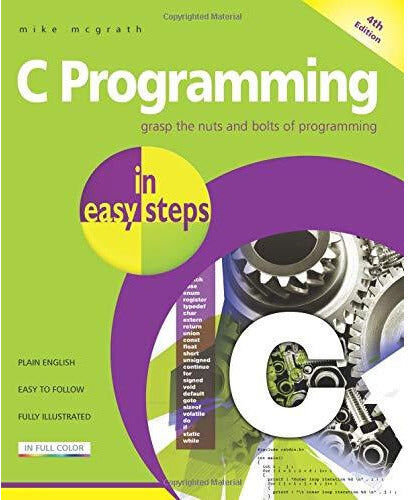
In Easy Steps Limited C Programming In Easy Steps 4th EditionC Programming in easy steps has an easy-to-follow style that will appeal to anyone who wants to begin programming in C, from programmers moving from another programming language, to the student who is studying C programming at school or college, or to those seeking a career in computing who need a fundamental understanding of procedural programming. C Programming in easy steps begins by explaining how to download and install a free C compiler so that you can quickly begin to create your own executable programs by copying the book's examples. You need have no previous knowledge of any programming language so it's ideal for the newcomer to computer programming. Each chapter builds your knowledge of C. C Programming in easy steps contains separate chapters on the major features of the C language. There are complete example programs that demonstrate each aspect of C together with screenshots that illustrate the output when that program has been executed. The sample code provided all has colored syntax-highlighting for clearer understanding. By the end of this book you will have gained a sound understanding of the C language and be able to write your own C programs and compile them into executable files that can be run on any compatible computer. Fully updated and revised since the third edition, which was published in April 2009.5,49 £*Shipping: 2,99 £Secure redirect to the provider
-
DKNY Pure Framework Indoor only Geometric Area RugThe DKNY Pure Framework collection brings soft structure and modern texture to your surroundings. Hand-tufted from wool, each rug features a flatwoven base with raised patterns that add quiet dimension.982,00 $*Shipping: 0,00 $Secure redirect to the provider
-
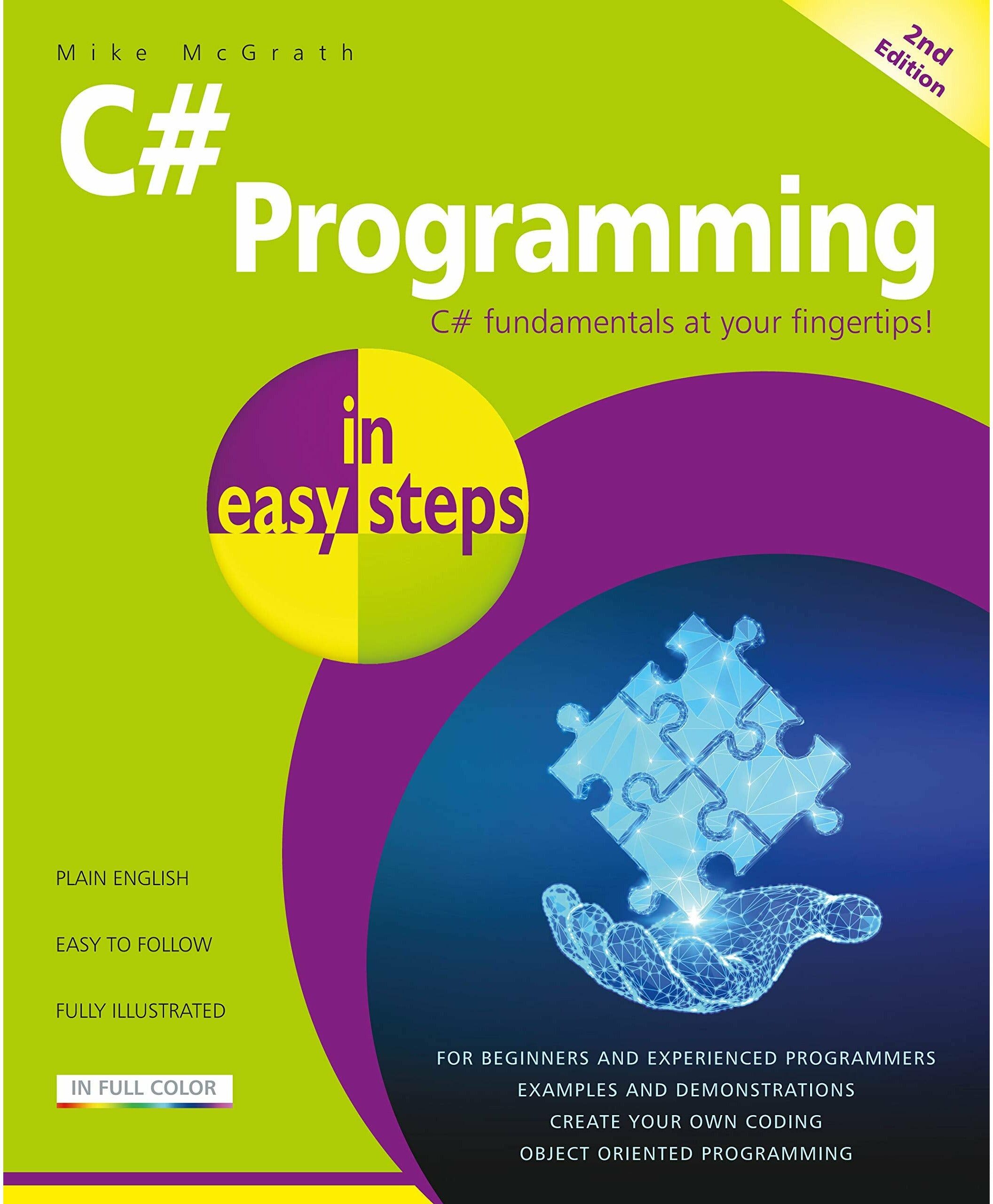
In Easy Steps Limited C# Programming in easy steps, 2nd edition by Mike McGrathC# Programming in easy steps, 2nd edition will teach you to code applications, and demonstrates every aspect of the C# language you will need to produce professional programming results. Its examples provide clear syntax-highlighted code showing C# language basics including variables, arrays, logic, looping, methods, and classes. C# Programming in easy steps, 2nd edition begins by explaining how to install the free Visual Studio Community Edition, to create an environment in which you can quickly begin to create your own executable programs by copying the book's examples. It demonstrates all the C# language basics before moving on to provide examples of Object Oriented Programming. The book concludes by demonstrating how you can use your acquired knowledge to create graphic programs for traditional PC Desktop apps, and also as Universal apps for multiple devices. C# Programming in easy steps, 2nd edition has an easy-to-follow style that will appeal to: Anyone who wants to begin programming in C# The programmer who quickly wants to add C# to their skills set The hobbyist who wants to begin creating apps for their own computer The student, and to those seeking a career in computing, who need a fundamental understanding of C# programming Table of contents: Getting started Storing values Performing operations Making statements Devising methods Handling strings Accessing files Solving problems Creating objects Controlling events Building an application Targeting devices4,98 £*Shipping: 1,99 £Secure redirect to the provider


-
How can adverbial phrases be used instead of adverbial clauses?
Adverbial phrases can be used instead of adverbial clauses to provide additional information about the verb, adjective, or adverb in a sentence. Adverbial phrases are often shorter and more concise than adverbial clauses, making them a more efficient way to convey the same information. For example, instead of saying "When the sun sets, we will go for a walk," you can use the adverbial phrase "At sunset, we will go for a walk." This simplifies the sentence while still conveying the same time-related information. **
-
How do you transform adverbial determinations into adverbial clauses? Please help.
To transform adverbial determinations into adverbial clauses, you need to add a subject and a verb to the adverbial determination. For example, the adverbial determination "after the party" can be transformed into the adverbial clause "after we left the party." This transformation allows the adverbial determination to function as a complete clause within a sentence. Additionally, you may need to adjust the tense and structure of the adverbial determination to fit the context of the sentence. **
-
What are adverbial particles?
Adverbial particles are words that are used to modify verbs, adjectives, or other adverbs. They are often used to indicate direction, location, or manner. In English, adverbial particles are commonly used in phrasal verbs, where they are combined with a verb to create a new meaning. For example, in the phrasal verb "look up," the adverbial particle "up" modifies the meaning of the verb "look." **
-
What is the difference between formulating an adverbial clause as an adverbial phrase and formulating an adverbial phrase as an adverbial clause? Aren't they the same thing?
Formulating an adverbial clause as an adverbial phrase involves expressing a clause (a group of words containing a subject and a verb) as a single adverbial phrase, typically by removing the subject and verb. On the other hand, formulating an adverbial phrase as an adverbial clause involves expanding a phrase (a group of related words without a subject and verb) into a full clause by adding a subject and verb. While both adverbial clauses and adverbial phrases serve to modify verbs, adjectives, or other adverbs, they are not the same thing due to their structural differences and the presence or absence of a subject and verb. **


What is an instrumental adverbial?
An instrumental adverbial is a type of adverbial that provides information about the means or instrument used to perform an action. It answers the question "how?" or "by what means?" For example, in the sentence "She cut the vegetables with a knife," the adverbial phrase "with a knife" is instrumental, indicating the tool used to perform the action of cutting. Instrumental adverbials are important for providing additional details about the action being described. **
How do adverbial clauses work?
Adverbial clauses function as adverbs within a sentence, providing information about time, place, manner, condition, purpose, or reason. They often begin with subordinating conjunctions such as "when," "where," "how," "if," "because," and "although." These clauses can modify verbs, adjectives, or other adverbs, adding detail and context to the main clause. Adverbial clauses can be placed at the beginning, middle, or end of a sentence, and they help to connect ideas and show the relationship between different parts of a sentence. **
Top-Angebote
Products related to Adverbial:
-
Terra by Obeetee Nimes Diamond Framework RugTerra by Obeetee redefines timeless craftsmanship for the modern world. Rooted in the rich traditions of old-world textile artistry and elevated by innovative manufacturing techniques, Terra brings together heritage and modernity in every piece.25,49 $*Shipping: 0,00 $Secure redirect to the provider
-
In Easy Steps Limited C Programming In Easy Steps 4th EditionC Programming in easy steps has an easy-to-follow style that will appeal to anyone who wants to begin programming in C, from programmers moving from another programming language, to the student who is studying C programming at school or college, or to those seeking a career in computing who need a fundamental understanding of procedural programming. C Programming in easy steps begins by explaining how to download and install a free C compiler so that you can quickly begin to create your own executable programs by copying the book's examples. You need have no previous knowledge of any programming language so it's ideal for the newcomer to computer programming. Each chapter builds your knowledge of C. C Programming in easy steps contains separate chapters on the major features of the C language. There are complete example programs that demonstrate each aspect of C together with screenshots that illustrate the output when that program has been executed. The sample code provided all has colored syntax-highlighting for clearer understanding. By the end of this book you will have gained a sound understanding of the C language and be able to write your own C programs and compile them into executable files that can be run on any compatible computer. Fully updated and revised since the third edition, which was published in April 2009.5,49 £*Shipping: 2,99 £Secure redirect to the provider
-
DKNY Pure Framework Indoor only Geometric Area RugThe DKNY Pure Framework collection brings soft structure and modern texture to your surroundings. Hand-tufted from wool, each rug features a flatwoven base with raised patterns that add quiet dimension.982,00 $*Shipping: 0,00 $Secure redirect to the provider
-
How can adverbial clauses be transformed into adverbial phrases?
Adverbial clauses can be transformed into adverbial phrases by removing the subject and verb of the clause and keeping only the modifying words. This results in a shorter phrase that still conveys the same information as the original clause. For example, the adverbial clause "When the sun sets" can be transformed into the adverbial phrase "At sunset." This transformation helps to simplify sentences and make them more concise. **
-
What are adverbial clauses and what are adverbial determinations? Help!
Adverbial clauses are groups of words that function as adverbs in a sentence, providing information about time, place, manner, or reason. They often begin with subordinating conjunctions such as "when," "where," "how," or "why." Adverbial determiners, on the other hand, are words or phrases that modify a verb, adjective, or other adverb by providing additional information about time, frequency, degree, or manner. They can include words like "often," "very," "soon," or "almost." Both adverbial clauses and adverbial determiners help to add detail and specificity to a sentence. **
-
How can adverbial phrases be used instead of adverbial clauses?
Adverbial phrases can be used instead of adverbial clauses to provide additional information about the verb, adjective, or adverb in a sentence. Adverbial phrases are often shorter and more concise than adverbial clauses, making them a more efficient way to convey the same information. For example, instead of saying "When the sun sets, we will go for a walk," you can use the adverbial phrase "At sunset, we will go for a walk." This simplifies the sentence while still conveying the same time-related information. **
-
How do you transform adverbial determinations into adverbial clauses? Please help.
To transform adverbial determinations into adverbial clauses, you need to add a subject and a verb to the adverbial determination. For example, the adverbial determination "after the party" can be transformed into the adverbial clause "after we left the party." This transformation allows the adverbial determination to function as a complete clause within a sentence. Additionally, you may need to adjust the tense and structure of the adverbial determination to fit the context of the sentence. **
Similar search terms for Adverbial
-
In Easy Steps Limited C# Programming in easy steps, 2nd edition by Mike McGrathC# Programming in easy steps, 2nd edition will teach you to code applications, and demonstrates every aspect of the C# language you will need to produce professional programming results. Its examples provide clear syntax-highlighted code showing C# language basics including variables, arrays, logic, looping, methods, and classes. C# Programming in easy steps, 2nd edition begins by explaining how to install the free Visual Studio Community Edition, to create an environment in which you can quickly begin to create your own executable programs by copying the book's examples. It demonstrates all the C# language basics before moving on to provide examples of Object Oriented Programming. The book concludes by demonstrating how you can use your acquired knowledge to create graphic programs for traditional PC Desktop apps, and also as Universal apps for multiple devices. C# Programming in easy steps, 2nd edition has an easy-to-follow style that will appeal to: Anyone who wants to begin programming in C# The programmer who quickly wants to add C# to their skills set The hobbyist who wants to begin creating apps for their own computer The student, and to those seeking a career in computing, who need a fundamental understanding of C# programming Table of contents: Getting started Storing values Performing operations Making statements Devising methods Handling strings Accessing files Solving problems Creating objects Controlling events Building an application Targeting devices4,98 £*Shipping: 1,99 £Secure redirect to the provider
-
DKNY Pure Framework Indoor only Geometric Area RugThe DKNY Pure Framework collection brings soft structure and modern texture to your surroundings. Hand-tufted from wool, each rug features a flatwoven base with raised patterns that add quiet dimension.1196,00 $*Shipping: 0,00 $Secure redirect to the provider
-
DKNY Pure Framework Indoor only Geometric Area RugThe DKNY Pure Framework collection brings soft structure and modern texture to your surroundings. Hand-tufted from wool, each rug features a flatwoven base with raised patterns that add quiet dimension.1196,00 $*Shipping: 0,00 $Secure redirect to the provider
-
What are adverbial particles?
Adverbial particles are words that are used to modify verbs, adjectives, or other adverbs. They are often used to indicate direction, location, or manner. In English, adverbial particles are commonly used in phrasal verbs, where they are combined with a verb to create a new meaning. For example, in the phrasal verb "look up," the adverbial particle "up" modifies the meaning of the verb "look." **
-
What is the difference between formulating an adverbial clause as an adverbial phrase and formulating an adverbial phrase as an adverbial clause? Aren't they the same thing?
Formulating an adverbial clause as an adverbial phrase involves expressing a clause (a group of words containing a subject and a verb) as a single adverbial phrase, typically by removing the subject and verb. On the other hand, formulating an adverbial phrase as an adverbial clause involves expanding a phrase (a group of related words without a subject and verb) into a full clause by adding a subject and verb. While both adverbial clauses and adverbial phrases serve to modify verbs, adjectives, or other adverbs, they are not the same thing due to their structural differences and the presence or absence of a subject and verb. **
-
What is an instrumental adverbial?
An instrumental adverbial is a type of adverbial that provides information about the means or instrument used to perform an action. It answers the question "how?" or "by what means?" For example, in the sentence "She cut the vegetables with a knife," the adverbial phrase "with a knife" is instrumental, indicating the tool used to perform the action of cutting. Instrumental adverbials are important for providing additional details about the action being described. **
-
How do adverbial clauses work?
Adverbial clauses function as adverbs within a sentence, providing information about time, place, manner, condition, purpose, or reason. They often begin with subordinating conjunctions such as "when," "where," "how," "if," "because," and "although." These clauses can modify verbs, adjectives, or other adverbs, adding detail and context to the main clause. Adverbial clauses can be placed at the beginning, middle, or end of a sentence, and they help to connect ideas and show the relationship between different parts of a sentence. **
* All prices are inclusive of VAT and, if applicable, plus shipping costs. The offer information is based on the details provided by the respective shop and is updated through automated processes. Real-time updates do not occur, so deviations can occur in individual cases. ** Note: Parts of this content were created by AI.